Short answer: Materials differ, but the assembly and installation scope matter as much as the label. The right next step depends on what is already in the building, what can be accessed and whether another condition should be resolved first.
Fibreglass vs Cellulose Attic Insulation: What Should Homeowners Compare? should be discussed as a defined scope rather than a product name alone. In Milton, homes can differ in roof shape, attic access, previous renovation work and existing materials. A recommendation made without those details may overlook gaps, blocked airflow or a moisture concern. The sections below set out what a useful assessment and written scope should cover.
Fibreglass options and installation details
Fibreglass may be supplied as loose fill or batts, and the method changes how it is fitted to the assembly. Batts need a careful fit without crushing or leaving gaps. Loose fill requires product-specific coverage, depth and settling information. Existing material, access, roof-edge ventilation and air sealing still determine the preparation. A material label is not a substitute for a complete installation scope.
For fibreglass vs cellulose attic insulation: what should homeowners compare?, this detail may change the scope even if the main symptom seems straightforward. Ask what was observed, how it will be handled and which parts remain outside the proposed work. The answer should be specific to the house and visible conditions.
Cellulose options and installation details
Cellulose loose fill is commonly distributed over an attic floor, including irregular areas that are difficult to cover with individual batts. The specified installed density, coverage area and depth follow the particular product instructions. Existing insulation, edge protection, access and moisture history affect suitability. No single material can be declared best for every attic without looking at the assembly and the intended work.
This is one of the checks that distinguishes a material choice from a complete fibreglass vs cellulose attic insulation: what should homeowners compare? plan. The written scope should distinguish what can be reached, what preparation is included and what must be verified after installation.
Blown-in describes a method, not a material
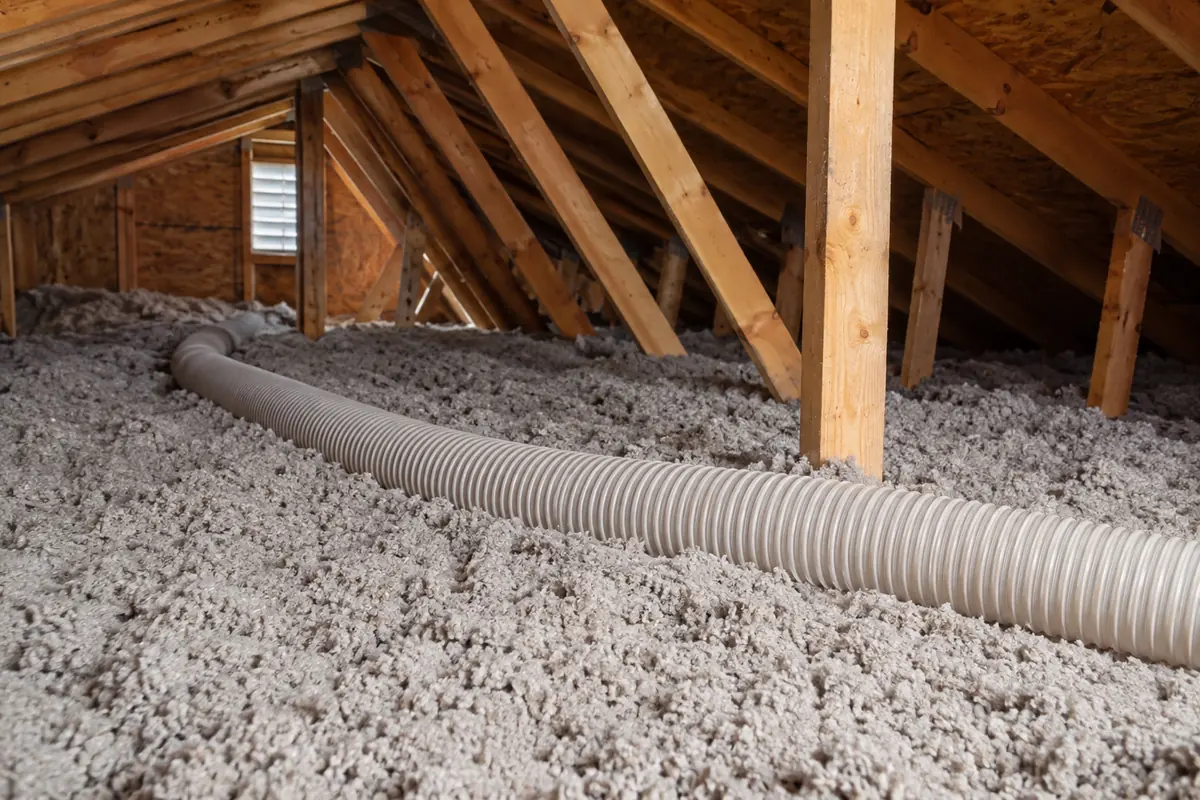
A blowing machine distributes loose-fill insulation through a hose. The material might be fibreglass or cellulose, with different product coverage instructions. The method can be part of a new installation or a suitable top-up, but it does not replace preparation. Baffles, air sealing, hatch access and uniform distribution remain part of the discussion, particularly around low roof edges and service areas.
In an existing Milton home, an observation in one accessible area should not be assumed to describe the whole assembly. If the condition is concealed or outside the insulation trade, a separate assessment can be more useful than a confident guess from a photograph.
R-value, depth and product data
R-value expresses resistance to heat flow. The depth needed to achieve a target depends on the material and product, existing insulation, installation density and the condition of the assembly. Inches measured in isolation cannot identify the combined performance. For an existing home, a target should be checked against current guidance, program requirements if applicable and the actual roof or ceiling assembly rather than copied from a generic chart.
For fibreglass vs cellulose attic insulation: what should homeowners compare?, this detail may change the scope even if the main symptom seems straightforward. Ask what was observed, how it will be handled and which parts remain outside the proposed work. The answer should be specific to the house and visible conditions.
Read the existing insulation before choosing a scope
An attic can contain more than one material or more than one generation of work. Look at the accessible depth, distribution, compression and any areas disturbed by storage or renovations. A level measurement near the hatch does not describe the eaves, corners or areas around mechanical equipment. The condition and compatibility of what remains determines whether it can be retained, covered or must be addressed first.
This is one of the checks that distinguishes a material choice from a complete fibreglass vs cellulose attic insulation: what should homeowners compare? plan. The written scope should distinguish what can be reached, what preparation is included and what must be verified after installation.
Coverage across the whole ceiling plane
A high depth in one convenient spot does not compensate for gaps elsewhere. Uneven application, wind movement, low-clearance edges and obstructions can create short paths for heat transfer. A useful installation plan identifies the area to be insulated, the target performance and how uniform coverage will be checked. Depth markers and product coverage charts matter more than an unsupported estimate of inches.
In an existing Milton home, an observation in one accessible area should not be assumed to describe the whole assembly. If the condition is concealed or outside the insulation trade, a separate assessment can be more useful than a confident guess from a photograph.
Air leakage is a separate question
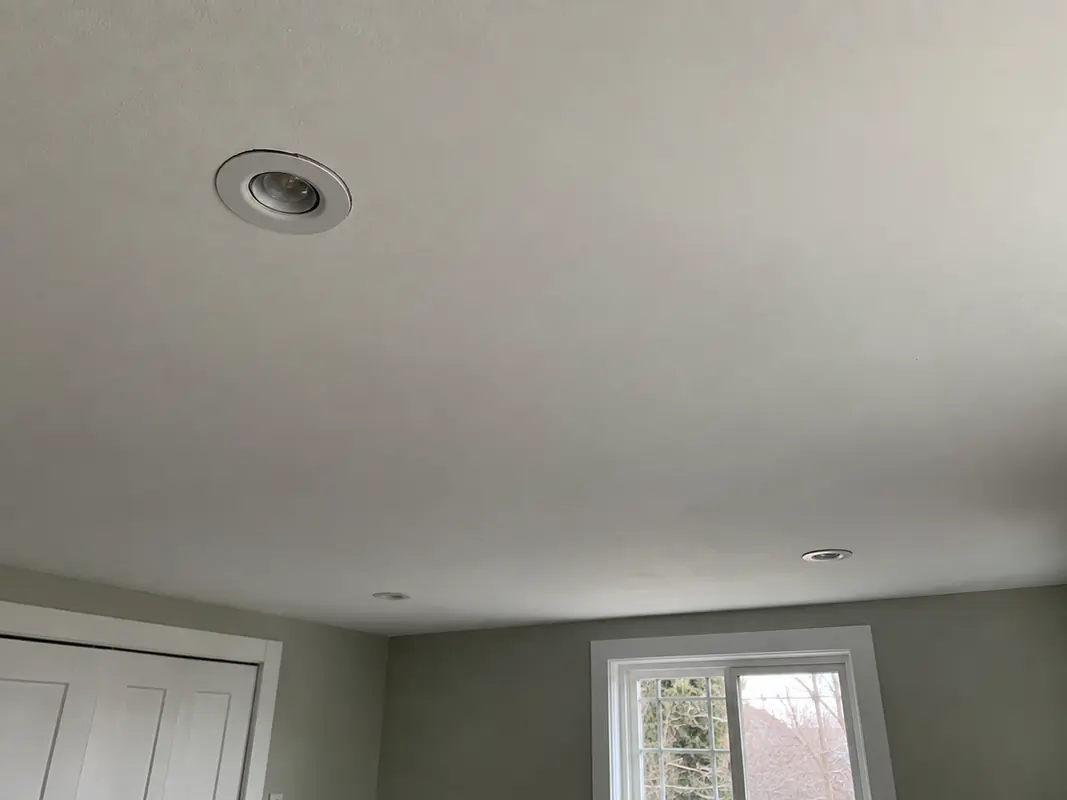
Loose fill and batts slow conductive heat transfer, but ordinary insulation does not make ceiling penetrations airtight. Warm interior air can pass around a hatch, plumbing, wiring or top plates into a colder roof space. Accessible openings can be assessed before a new layer makes them harder to find. Sealing details must respect fixtures, clearances and any mechanical or combustion safety requirements.
For fibreglass vs cellulose attic insulation: what should homeowners compare?, this detail may change the scope even if the main symptom seems straightforward. Ask what was observed, how it will be handled and which parts remain outside the proposed work. The answer should be specific to the house and visible conditions.
Protect the intended roof-edge airflow
Soffit openings can be blocked when loose fill is placed right to the roof edge. Baffles can preserve an intake channel where that ventilation strategy applies and the roof geometry allows it. Their presence alone does not establish that airflow is adequate: the intake, exhaust and obstructions must be considered together. The insulation plan should show how coverage reaches the edge without filling the intended air path.
This is one of the checks that distinguishes a material choice from a complete fibreglass vs cellulose attic insulation: what should homeowners compare? plan. The written scope should distinguish what can be reached, what preparation is included and what must be verified after installation.
Ventilation needs an actual airflow path
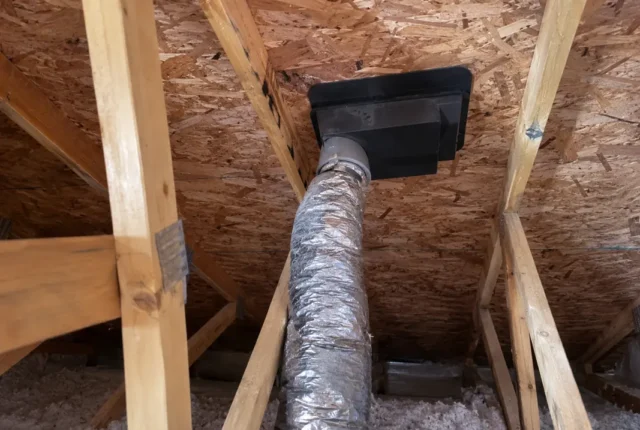
A vent count alone does not establish that a roof space has functional intake and exhaust. Soffits may be blocked by insulation or construction, while the roof shape can alter the available path. Ventilation and ceiling air sealing work together in a typical vented attic. Adding vents indiscriminately is not an automatic cure for frost or condensation; first understand moisture sources and the assembly.
In an existing Milton home, an observation in one accessible area should not be assumed to describe the whole assembly. If the condition is concealed or outside the insulation trade, a separate assessment can be more useful than a confident guess from a photograph.
Access changes the practical installation
The hatch size, truss layout, pitch, obstructions and safe routes through the attic affect where work can be carried out. A low eave may require a different method from the open central floor. An estimate should identify inaccessible zones and any work that depends on opening finishes. Existing wiring or equipment may also require a related trade or protected clearance.
For fibreglass vs cellulose attic insulation: what should homeowners compare?, this detail may change the scope even if the main symptom seems straightforward. Ask what was observed, how it will be handled and which parts remain outside the proposed work. The answer should be specific to the house and visible conditions.
Treat the attic hatch as part of the ceiling
A hatch interrupts both insulation and the air barrier. A useful review considers the lid, frame, latch, weatherstripping and any insulated cover without making the opening unsafe or impossible to use. Material around the access should maintain the intended coverage without falling into living space. Pull-down stair assemblies need their own fit and access assessment.
This is one of the checks that distinguishes a material choice from a complete fibreglass vs cellulose attic insulation: what should homeowners compare? plan. The written scope should distinguish what can be reached, what preparation is included and what must be verified after installation.
Investigate moisture before adding material
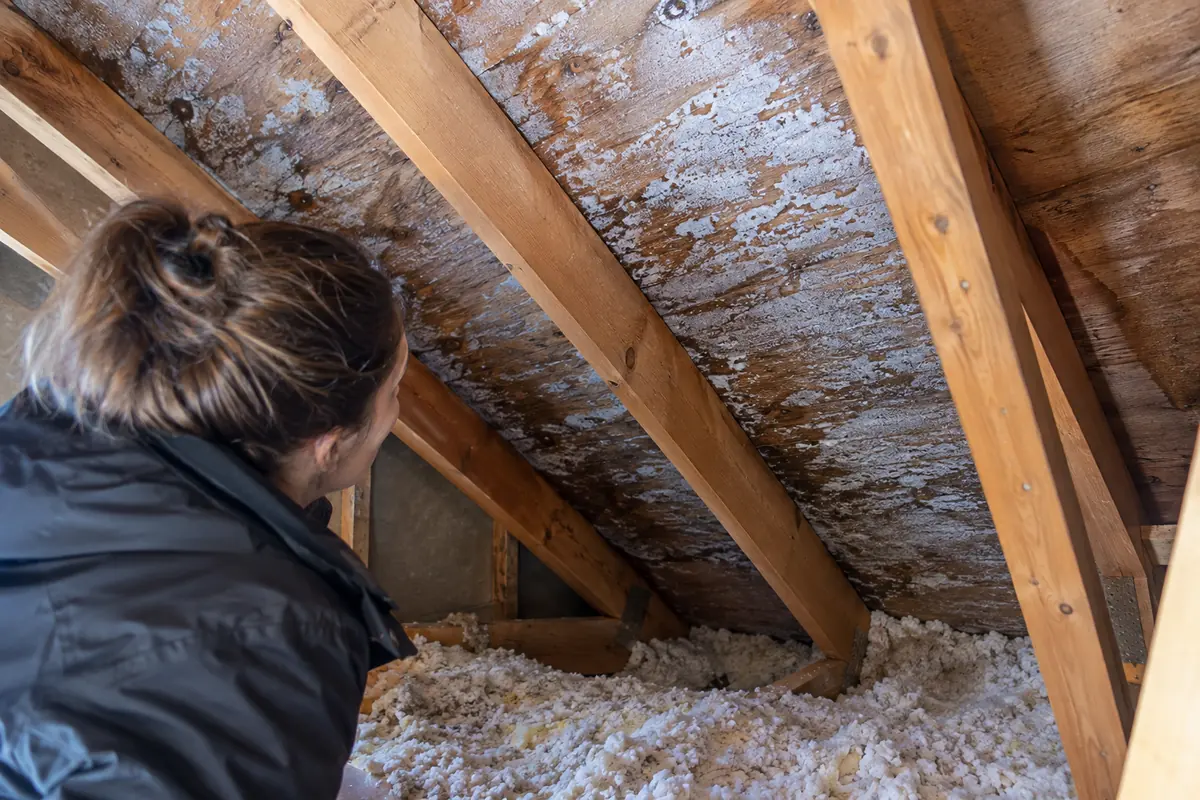
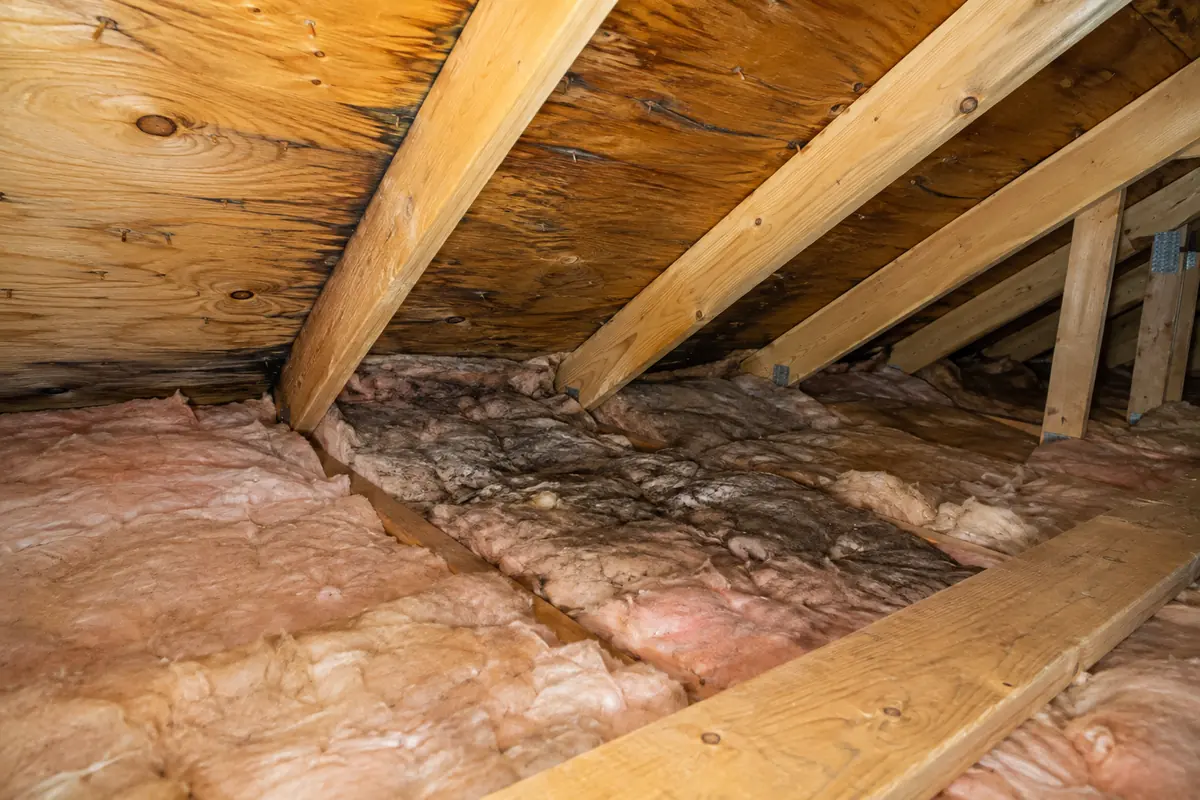
Water staining, frost, damp insulation or a recurring musty condition can have different sources. Roof leakage, exhausted indoor air, plumbing and warm air escaping through the ceiling are separate possibilities. Covering wet or suspect material makes the condition harder to observe. The water source and any specialized assessment should be addressed before an ordinary insulation upgrade proceeds.
In an existing Milton home, an observation in one accessible area should not be assumed to describe the whole assembly. If the condition is concealed or outside the insulation trade, a separate assessment can be more useful than a confident guess from a photograph.
Define the work before comparing prices
Attic area is only one cost driver. Top-up versus removal, material choice, access, air sealing, baffle work, hatch improvements, difficult eaves and disposal can change both labour and materials. Ask whether the estimate includes preparation and a final coverage standard. A low headline price can exclude important details; a larger price is not automatically better without a clear written scope.
For fibreglass vs cellulose attic insulation: what should homeowners compare?, this detail may change the scope even if the main symptom seems straightforward. Ask what was observed, how it will be handled and which parts remain outside the proposed work. The answer should be specific to the house and visible conditions.
A practical project sequence
Begin with the symptom and existing condition, then decide whether another trade must address an active issue. Next establish the preparation: access, safe work boundaries, air sealing and roof-edge airflow where relevant. Material selection and target coverage come after those decisions. The final discussion should confirm which areas were worked on, which were inaccessible and any follow-up that remains outside insulation work.
This is one of the checks that distinguishes a material choice from a complete fibreglass vs cellulose attic insulation: what should homeowners compare? plan. The written scope should distinguish what can be reached, what preparation is included and what must be verified after installation.
What information helps an assessment
A short description of the affected rooms, property type, attic hatch location and known past work is more useful than guessing the material needed. Mention any roof leak, plumbing event, exhaust concern, staining or suspected specialized material. Photos of safely accessible conditions may help explain the question, but they do not replace an on-site assessment or establish a remote diagnosis.
In an existing Milton home, an observation in one accessible area should not be assumed to describe the whole assembly. If the condition is concealed or outside the insulation trade, a separate assessment can be more useful than a confident guess from a photograph.
Confirm scope-specific municipal requirements
An ordinary insulation top-up and a renovation that opens or changes a building assembly are not the same project. Milton publishes building-permit guidance for renovations, but the exact requirement depends on the proposed work. Do not infer an attic-specific permit rule from a general page. Ask the Town of Milton Building Division when the scope includes structural or other regulated alterations.
For fibreglass vs cellulose attic insulation: what should homeowners compare?, this detail may change the scope even if the main symptom seems straightforward. Ask what was observed, how it will be handled and which parts remain outside the proposed work. The answer should be specific to the house and visible conditions.
Questions for both material proposals
Ask whether the bid describes loose fill or batts, which product is specified, how existing insulation will be treated and what target coverage will be verified. Check the eaves and access hatch, and ask whether accessible air leaks are included. The apparent price difference may reflect preparation rather than material alone. Product-specific density, bag count and depth guidance should be documented. Claims of universal superiority are less useful than an installation plan for the actual attic.
Questions to bring to the assessment
For fibreglass vs cellulose attic insulation: what should homeowners compare?, ask how fibreglass options and installation details and cellulose options and installation details will be checked. Describe the condition you see, when it occurs and any previous leak or renovation. Request a written explanation of preparation, the areas that can be reached, the final coverage or performance target and any exclusion that needs another trade.
Read Natural Resources Canada’s roof and attic guidance for technical background. To discuss fibreglass vs cellulose attic insulation: what should homeowners compare? at your property, request an attic assessment and describe the existing condition.
Keep exploring
Attic Frost and Condensation: What Can Cause Moisture in the Roof Space?
Read guide →
Why Is the Upper Floor Hot in Summer and Cold in Winter?
Read guide →