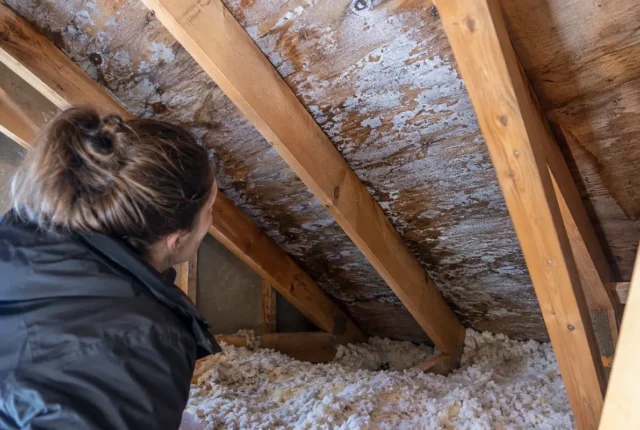
An attic insulation top-up in Milton can be a practical way to improve coverage when the existing insulation is dry, stable, and suitable to remain in place. It is not simply a matter of adding more material. Before new insulation covers the attic floor, the existing layer, accessible air leaks, roof-edge airflow, attic hatch, and any signs of moisture need to be considered.
At Milton Attic Insulation, we provide attic insulation top-ups as part of a defined scope based on the accessible conditions in the home. The goal is to determine whether adding coverage is appropriate, what preparation is needed first, and how completed coverage will be checked across the attic rather than at one convenient spot.
When an attic insulation top-up can make sense
A top-up is generally worth considering when existing attic insulation is present but thin, uneven, compressed, or disturbed in places, while still dry and in sound condition. Older attics can have several generations of insulation, with coverage that looks adequate near the hatch but drops off around eaves, corners, or mechanical equipment.
Adding insulation over an existing layer can be suitable when the old material can remain. The important question is not only what material is visible, but whether it is dry, reasonably stable, and compatible with the proposed work. A review of accessible depth and distribution helps establish whether a top-up can address the problem or whether another step should come first.
A top-up is less appropriate when there is an active roof leak, damp or frost-affected insulation, recurring staining, or a material that needs specialized assessment. Covering a moisture issue can make the source harder to find later. Insulation also does not repair a roof leak, defective flashing, plumbing issue, or disconnected exhaust duct.
Why one depth measurement is not enough
Attic insulation works as a continuous layer across the ceiling plane. A deep layer in the middle of the attic does not offset thin areas around the perimeter, gaps near obstructions, or insulation compressed by storage and past work. Those lower-coverage areas can create easier paths for heat transfer.
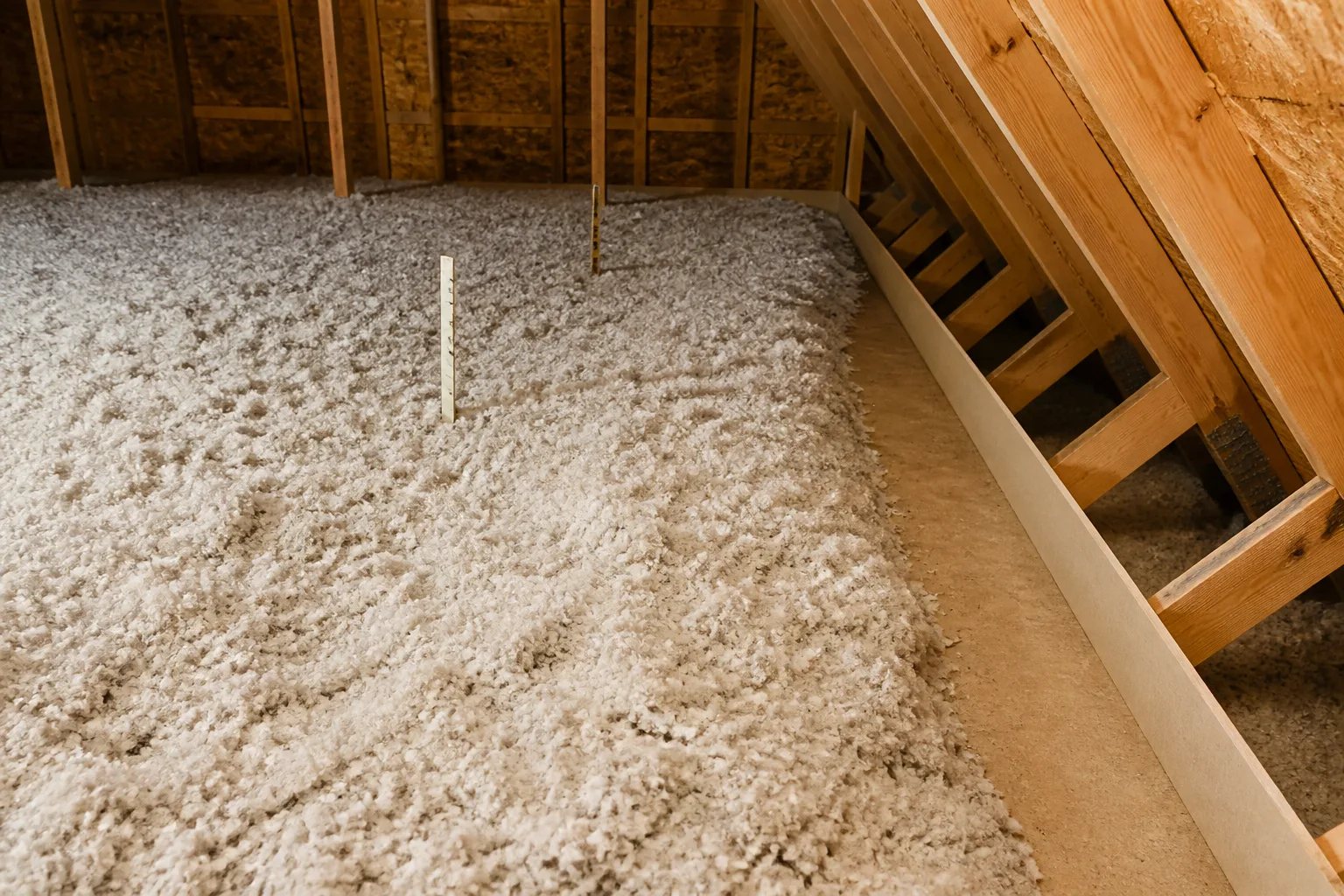
A useful scope identifies the accessible attic areas, the intended coverage target, and how uniform distribution will be checked. Product coverage charts and depth markers are more meaningful than a general promise of a certain number of inches because the required depth depends on the insulation product, installed density, existing insulation, and target thermal resistance.
R-value measures resistance to heat flow. It is not determined by depth alone: different products achieve different values at different installed depths, and the existing layer contributes only if it remains in suitable condition. For this reason, an estimate should identify the intended final coverage or performance target instead of relying on a single depth reading near the access hatch.
Air sealing should be considered before new insulation
Insulation slows heat transfer, but it does not automatically make openings in a ceiling airtight. Warm indoor air can move through accessible gaps around plumbing, wiring, top plates, and the attic hatch. In cold weather, that air movement can carry moisture into the roof space.
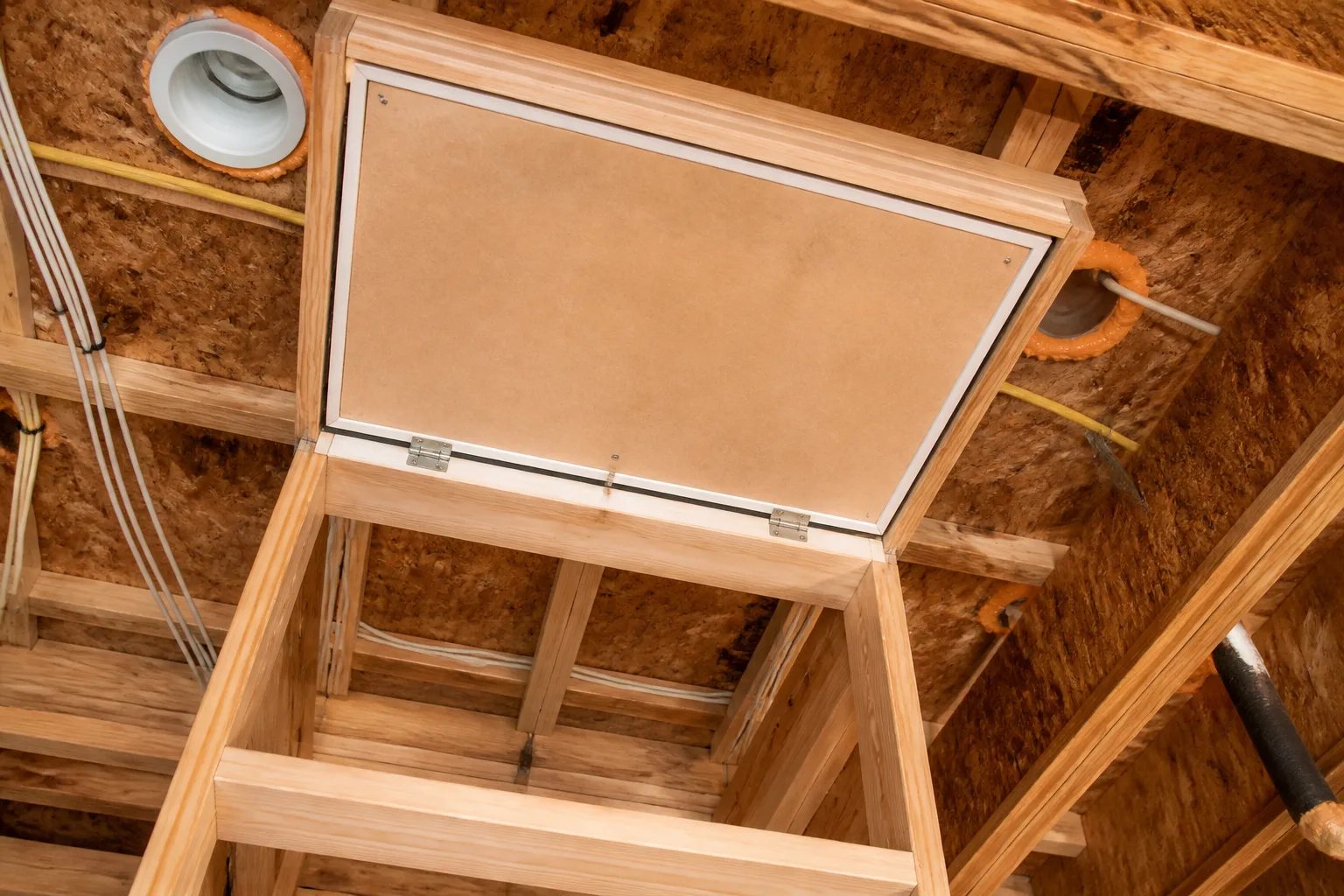
Where accessible and appropriate, these leakage points are easier to identify before new insulation is placed over them. Air-sealing details must also respect safe clearances around fixtures, equipment, and any mechanical or combustion-related components. A top-up should not bury details that need to remain accessible or protected.
The attic hatch deserves particular attention because it interrupts both the insulation layer and the air barrier. The lid, frame, latch, weatherstripping, and any insulated cover all affect how the opening performs. Insulation surrounding the hatch also needs to stay contained so it does not fall into the living space when the hatch is opened. Learn more about attic air sealing in Milton and attic hatch insulation and air sealing.
Do not block the roof-edge airflow path
In a typical vented attic, insulation at the roof edge needs to be planned around the intended soffit intake path. Loose-fill insulation installed too tightly against the roof edge can block openings that are meant to provide airflow. Baffles can help preserve an intake channel where the roof design and ventilation strategy call for them.
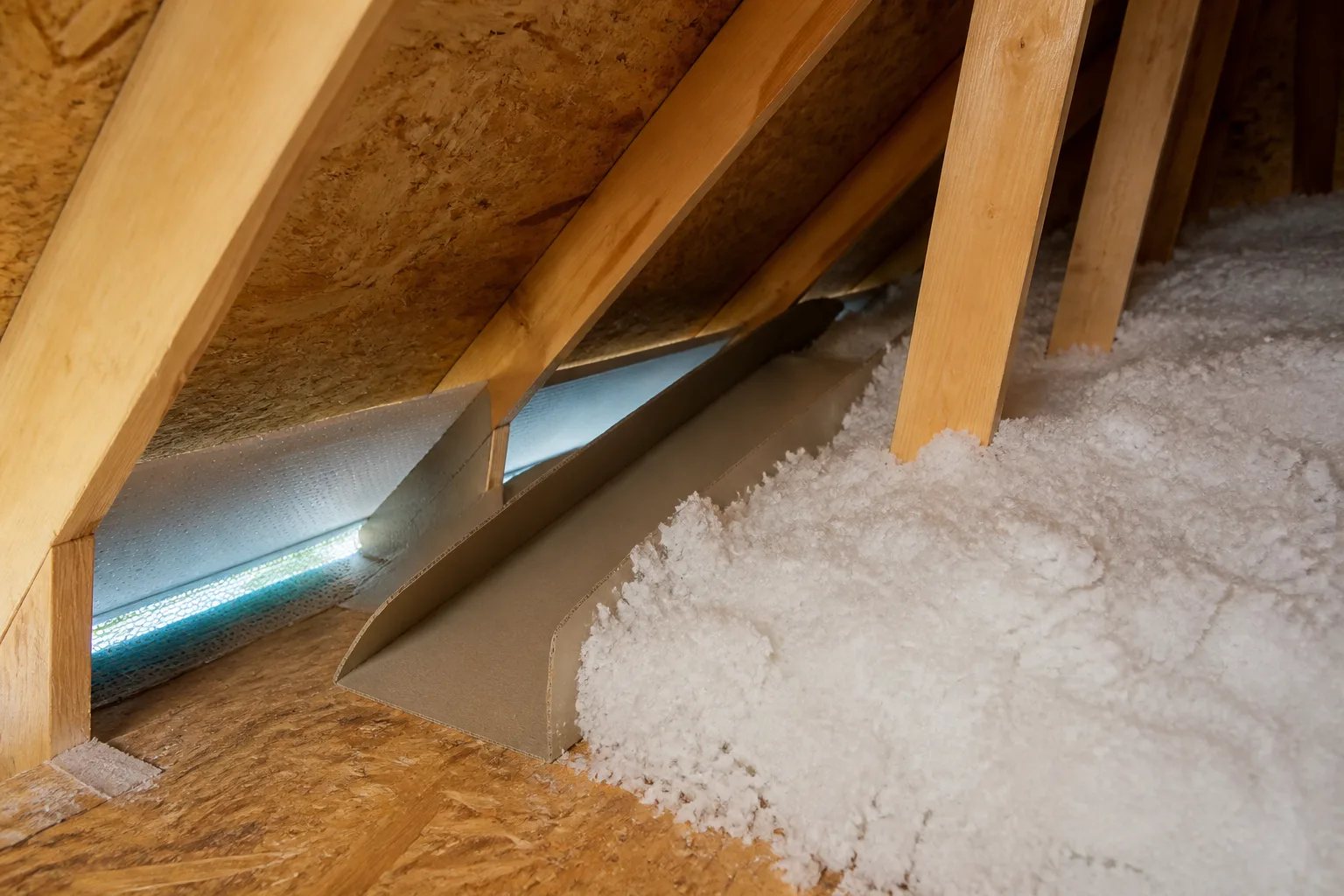
However, the presence of baffles alone does not prove that attic ventilation is working properly. Intake, exhaust, obstructions, roof geometry, and ceiling air leakage all affect the roof-space environment. Adding more vents is not an automatic solution for frost, condensation, or a musty attic condition. The source of moisture and the actual airflow path need to be understood first.
Our attic ventilation and baffles service addresses the relationship between insulation coverage and intended roof-edge airflow.
Blown-in insulation is a method, not a material
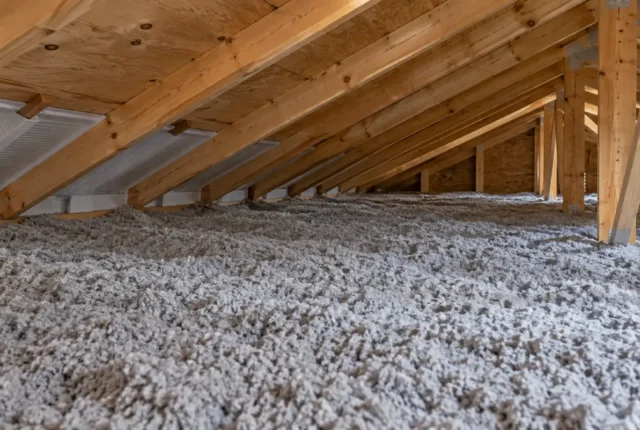
Many attic top-ups use loose-fill insulation distributed through a hose and blowing machine. “Blown-in” describes the installation method, not the material itself. Loose-fill fibreglass and cellulose can both be installed this way, and each product has its own coverage, installed depth, and density instructions.
Fibreglass is available as loose fill or batts. Batts need to fit closely without gaps or compression, while loose fill is distributed across the attic floor according to product-specific coverage information. Cellulose is generally used as loose fill and can suit irregular attic floor areas that would be difficult to cover with individual batts.
Neither material is automatically the best choice for every attic. Existing insulation, the condition of the assembly, access, low-clearance edges, ventilation details, and the planned final coverage all influence the decision. If you are comparing options, review our guides to fibreglass attic insulation and cellulose attic insulation.
Access affects what can be included in the work
An attic is rarely a completely open, uniform space. Hatch size, truss layout, roof pitch, stored belongings, low eaves, mechanical equipment, and safe travel routes all affect where work can be completed. A low perimeter area may require a different approach from the open centre of the attic.
A clear scope should distinguish accessible areas from areas that cannot be reached without opening finishes or completing separate work. It should also identify obstructions and any wiring or equipment that requires protected clearance or attention from another qualified trade. This avoids assuming the entire attic can be treated identically.
What to ask before approving an attic insulation top-up
A price comparison is most useful when each proposed scope covers the same work. Attic area is only one part of the project. Access difficulty, material, preparation, air sealing, baffles, hatch improvements, removal, disposal, and difficult eaves can all change the work required.
Assessment Checklist
Questions that make an attic top-up quote easier to compare
Bring these questions to an assessment so the proposed work is defined by the attic's actual accessible conditions.
- What is the condition, distribution, and accessible depth of the existing insulation?
- Can the current insulation remain in place, or is there a moisture, leak, disturbance, or other issue to resolve first?
- Which accessible air leaks, hatch details, or roof-edge airflow concerns are included in the scope?
- What material and final coverage or performance target will be used?
- How will uniform coverage be checked across low eaves, corners, and areas around obstructions?
- Which areas are inaccessible or excluded, and does any issue require another qualified trade?
When removal and replacement may be the better path
A top-up is not meant to conceal a continuing problem. Removal and replacement may be considered after a leak, heavy disturbance, renovation, or a finding that the existing insulation is unsuitable to retain. Suspected asbestos-containing materials, vermiculite, mould, or pest-related conditions require appropriately qualified evaluation or service and should not be treated as an ordinary insulation-removal project.
For a homeowner, the key distinction is simple: a top-up begins with permission to leave the old insulation in place. If that permission is not supported by the visible condition, moisture history, or planned renovation scope, the sequence changes. Read our comparison of attic top-up versus removal and replacement for a closer look at the decision.
Start with the condition, not the product
An attic insulation top-up should follow an assessment of what is already present, not a guess based on a room that feels cold or an insulation depth measured in one location. Sharing the location of the affected room, the attic hatch location, known renovations, and any leak, staining, frost, plumbing, or exhaust history helps define the right questions.
We offer attic insulation assessments in Milton to review accessible insulation depth, distribution, air-leakage clues, baffles, and visible roof-space conditions. A well-defined scope can then clarify what can be retained, what preparation is needed, which areas can be reached, and what remains outside insulation work.
Before Adding Insulation
Moisture concerns should be resolved before a top-up
Water staining, frost, damp insulation, or a recurring musty condition can point to a roof leak, plumbing issue, exhausted indoor air, or ceiling air leakage. New insulation should not cover wet or suspect material before the source is investigated.
Helpful answers
Frequently Asked Questions
Get a Clear Scope for Your Attic
Request an assessment to discuss visible attic conditions, existing insulation, and the work needed before a top-up is considered.
Keep exploring
How to Plan an Attic Insulation Upgrade in Milton
Read guide →
Attic Frost and Condensation: What Can Cause Moisture in the Roof Space?
Read guide →