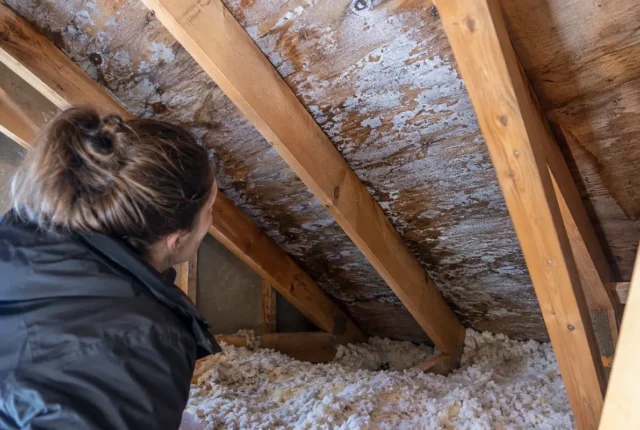
An attic insulation upgrade in Milton should begin with the attic’s existing condition, not a guess at how many inches of insulation to add. Coverage, moisture history, accessible air leaks, roof-edge airflow, hatch details, and access all affect whether a top-up, a more complete installation, or another repair should come first.
At Milton Attic Insulation, we provide attic assessments, insulation installation and top-ups, blown-in insulation, air sealing, ventilation and baffle work, hatch improvements, and removal and replacement where the existing condition calls for it. The goal is a defined scope that explains what can be addressed in the accessible attic and what needs separate attention.
Start by reading the insulation that is already there
Existing insulation is not always uniform. An attic may contain more than one material, older work below newer work, compressed areas near storage, or low spots around the perimeter. A depth measurement near the hatch only describes that one location. It does not confirm coverage at low eaves, corners, around equipment, or areas affected by previous renovations.
A useful review looks at accessible depth, distribution, disturbance, and condition. Those observations help determine whether existing material can remain under a new layer or whether it needs to be addressed before an upgrade. Our attic insulation inspection service focuses on accessible insulation coverage, air-leakage clues, baffles, and visible roof-space conditions.
R-value describes resistance to heat flow, but depth alone does not reveal the final R-value. The result depends on the specific material, existing layers, installation density for loose fill, and how evenly the material is installed. A proposed target should be tied to the actual assembly and the product’s coverage information, rather than a generic depth chart.
Decide whether a top-up or replacement fits the condition
A top-up can be a practical route when existing insulation is dry, stable, and suitable to leave in place. New material is then added to improve coverage, with attention to low areas, the attic hatch, and the roof edge. Learn more about attic insulation top-ups and the conditions that should be reviewed first.
Removal and replacement is a different scope. It may be considered after a leak, heavy disturbance, renovation work, or when existing material is not suitable to retain. Removal should not be used to make assumptions about suspected asbestos-containing material, vermiculite, mould, or pest conditions. Those concerns require appropriately qualified evaluation or service before ordinary insulation work proceeds.
The practical question is not simply whether old insulation looks thin. It is whether it is dry, stable, compatible with the intended work, and capable of being covered without concealing an unresolved condition.
Air sealing, ventilation, and insulation do different jobs
Insulation slows conductive heat transfer. It does not automatically make the ceiling airtight. Warm indoor air can escape through accessible gaps around attic hatches, wiring and plumbing penetrations, or top plates before reaching the roof space. Finding accessible leakage paths before new material covers them can make the insulation upgrade more complete.
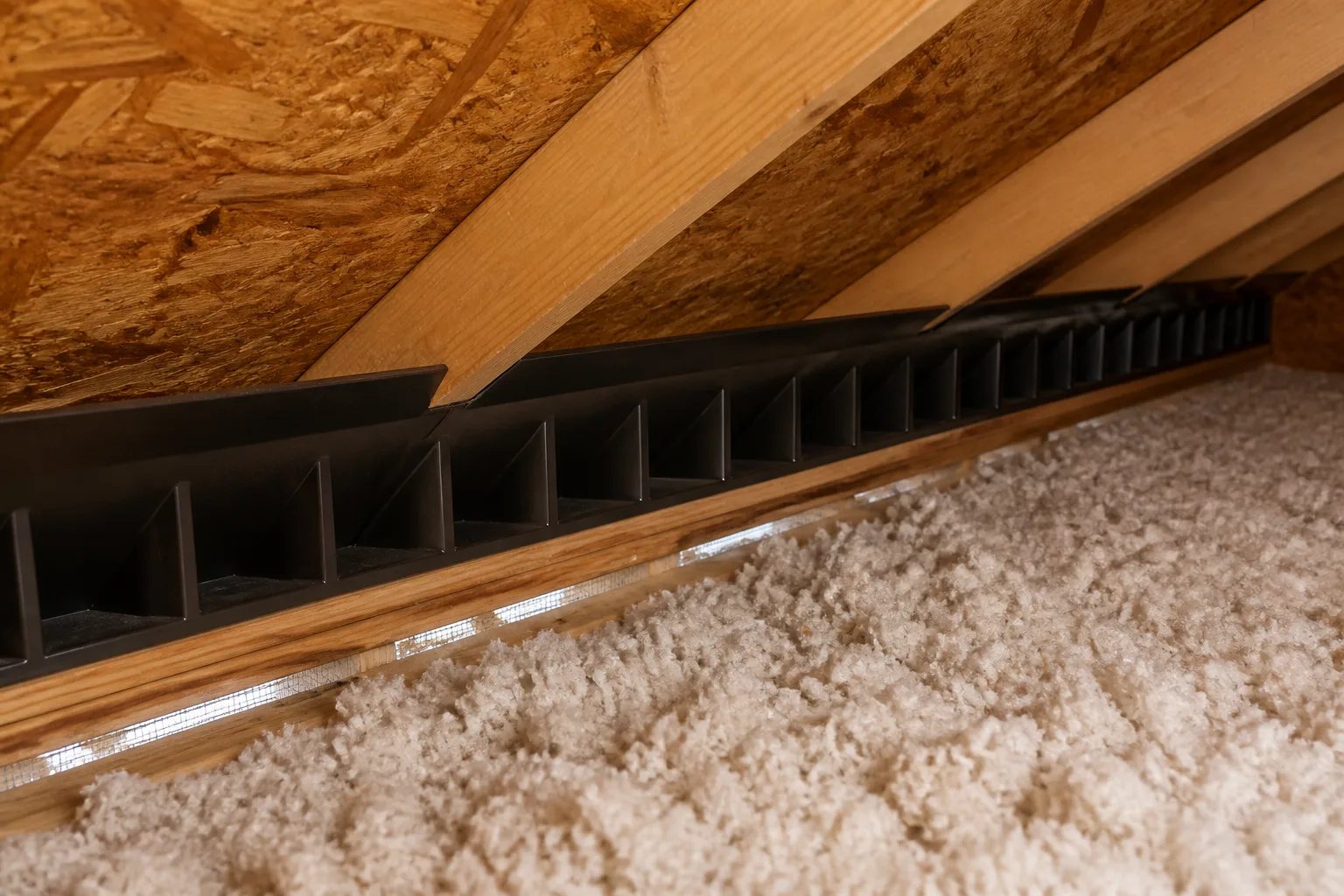
Ventilation is a separate but related part of a typical vented attic. A roof space needs a functional airflow path, not simply a certain number of visible vents. Insulation placed into soffit openings can interfere with intended intake airflow. Where the roof geometry and ventilation strategy call for them, baffles can preserve a channel at the roof edge while allowing insulation coverage to extend outward.
Adding vents alone is not an automatic fix for attic frost, condensation, or damp insulation. A recurring moisture condition can involve a roof leak, a plumbing issue, a disconnected exhaust, or indoor air escaping through the ceiling. The source should be investigated before suspect or wet material is covered. Our attic air sealing service and attic ventilation and baffles service address these distinct parts of an attic scope.
Before adding insulation
Do not cover an active moisture problem
Wet insulation, frost, water staining, or a recurring musty condition should be investigated before an insulation upgrade. Covering the area can hide a roof leak, plumbing issue, exhaust problem, or ceiling air leakage that needs a different solution.
Choose a material and method after the preparation is clear
Fibreglass and cellulose are distinct insulation materials. Both can be used in loose-fill applications, while fibreglass is also available in batts. Neither material is automatically the best choice for every attic. Existing insulation, attic layout, access, moisture history, intended coverage, and product-specific installation instructions all matter.
Blown-in describes the installation method, not the material. A blowing machine distributes loose-fill insulation through a hose. This can help distribute material across an attic floor and into irregular areas, but the hose does not seal ceiling penetrations, repair a leak, or verify that old material can stay. Product coverage charts, installed depth, distribution, and roof-edge protection still need to be part of the plan.
Batts require a careful fit. Gaps, compression, cutouts, or poorly supported sections can reduce coverage. Loose fill requires its own product-specific depth and coverage guidance. Our blown-in attic insulation service is available for projects where a loose-fill method suits the planned scope.
Access and attic-hatch details affect the finished work
The hatch size, truss layout, roof pitch, obstructions, and safe travel routes determine where work can be carried out. An open central attic area can be very different from a low-clearance eave. A written scope should identify areas that can be reached, areas that cannot be accessed without opening finishes, and any equipment or wiring that requires protected clearance or another trade.
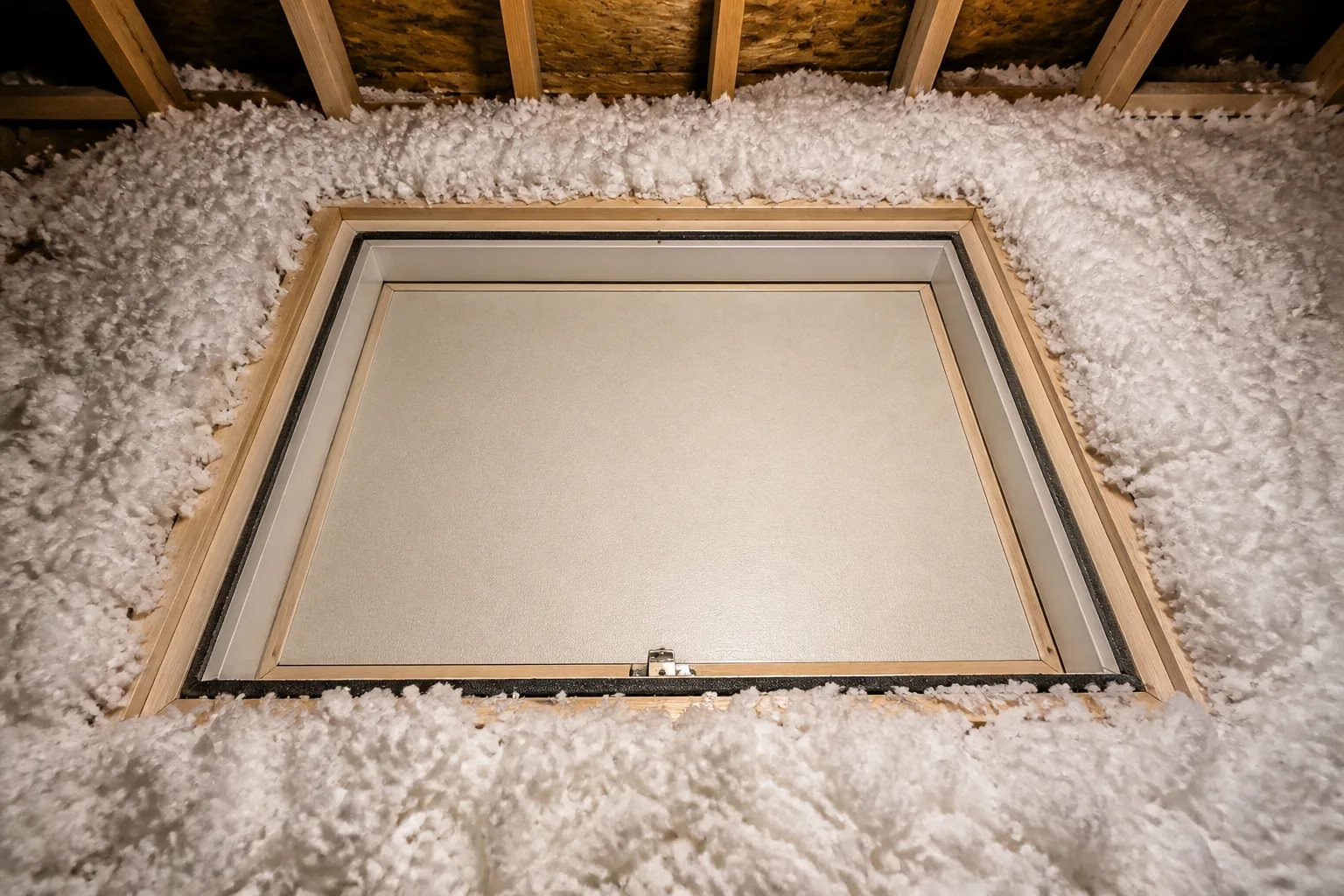
The attic hatch is part of the ceiling boundary, not a detail to ignore. It interrupts both insulation and the air barrier. A review can include the lid, frame, latch, weatherstripping, and an insulated cover, while ensuring the opening remains safe and usable. Material placed around the hatch also needs to stay in place when the opening is used. Pull-down stairs require their own fit and access review.
What a clear attic insulation upgrade scope should answer
Comparing estimates is easier when each scope describes the same work. Attic area affects cost, but it is only one factor. Removal, disposal, material choice, access, air sealing, baffles, hatch work, difficult eaves, and inaccessible areas can all change the labour and materials involved.
Estimate checklist
Questions to ask about an attic insulation upgrade
Use these points to compare scopes based on the work included, not just a headline price.
- What existing insulation was observed, and can it remain in place?
- Which accessible air leaks, hatch details, or roof-edge airflow issues are included?
- What material and installation method are proposed?
- What final coverage or performance target will be used, and how will it be checked?
- Which attic areas are accessible, and which are excluded?
- Is any leak, moisture issue, wiring concern, or other trade work required before insulation is installed?
A useful written scope identifies the preparation, material or method, intended coverage standard, and exclusions. It should also distinguish insulation work from an active roof leak, damaged flashing, disconnected exhaust, plumbing issue, electrical concern, or another condition that belongs to a different trade. If a renovation will open or alter a building assembly, permit requirements depend on the exact scope; confirm applicable requirements with the Town of Milton Building Division.
Information to share before an attic assessment
You do not need to identify the right material before contacting us. A more useful starting point is a clear description of the house and the concern. Mention which room feels uncomfortable, where the attic hatch is located, what you know about prior insulation or renovation work, and whether there has been a roof leak, plumbing event, staining, frost, damp insulation, or an exhaust concern.
Photos of safely accessible attic conditions can help communicate what you see, but they do not establish a remote diagnosis. An on-site assessment is the better way to define accessible conditions and a practical next step. For a detailed look at price variables, see what affects attic insulation cost in Milton.
Good attic insulation work is more than adding material in the centre of the attic. It is a coordinated plan for existing coverage, air leakage, moisture, access, roof-edge airflow, and verification of the finished coverage.
Helpful answers
Frequently Asked Questions
Get a clear attic upgrade scope
Tell us what you are seeing in the attic or affected rooms, and we can assess the accessible conditions before defining the next step.
Keep exploring
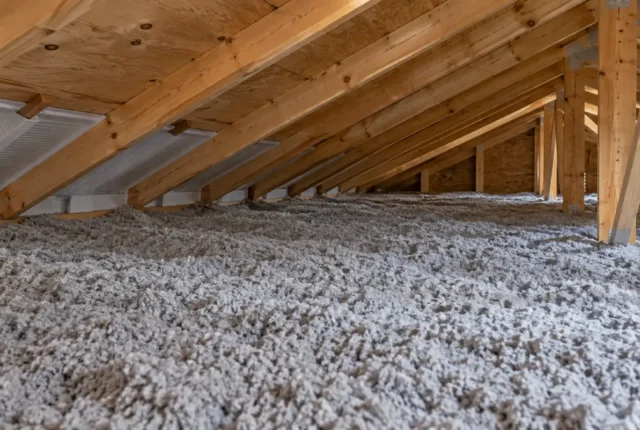
When Is an Attic Insulation Top-Up the Right Choice?
Read guide →
Attic Frost and Condensation: What Can Cause Moisture in the Roof Space?
Read guide →